Act I
“My son goes first.”
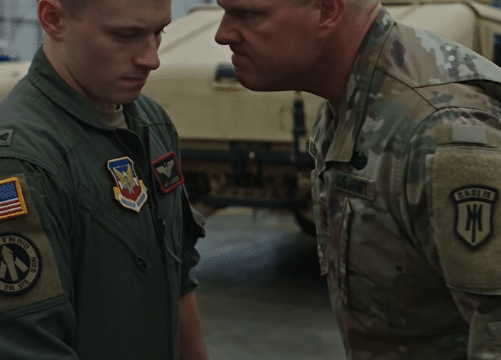
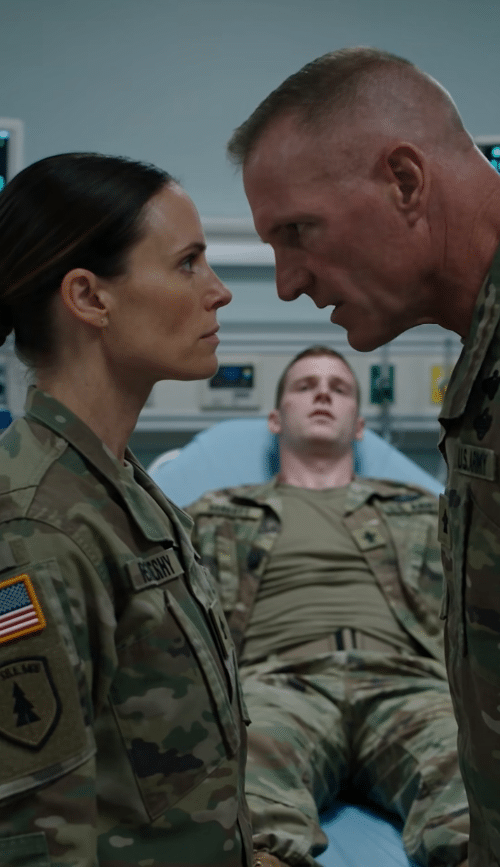
The Lieutenant General’s voice echoed through the military hospital’s emergency department. His twenty-five-year-old son stood beside him, holding his injured wrist, while a critically wounded Specialist lay motionless on a stretcher a few feet away.
Medical staff were already moving around the young soldier. Monitors tracked his condition, and a nurse was preparing the trauma bay for immediate treatment.
But the three-star officer had other priorities.
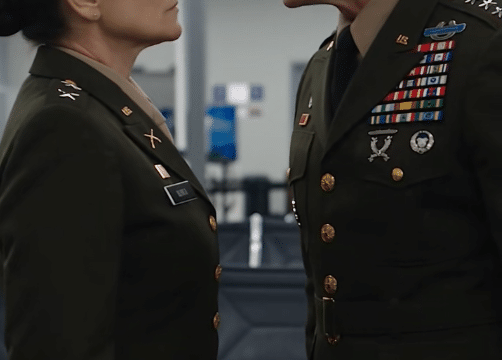
A woman in burgundy scrubs stood between him and the treatment area. Over her uniform, she wore a white military medical coat with subdued rank insignia. Her black hair was secured in a neat low bun, and her expression was focused, clinical, and completely composed.
“Not ahead of a critical soldier.”
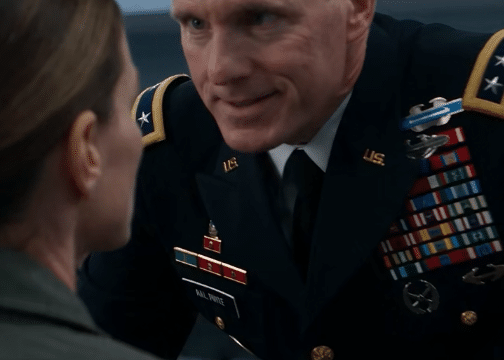
The General turned toward her. His dense ribbon rack and three-star insignia made his position unmistakable. He was accustomed to people moving when he spoke, especially inside facilities where his command authority carried enormous weight.
“Rank decides priority.”
She did not step aside.
The Specialist needed emergency treatment. The General’s son had a wrist injury that required medical attention, but it was not life-threatening. The distinction was obvious to the medical team, and the doctor was not going to let a powerful father turn an emergency department into a private waiting room.
The General’s expression darkened.
He swept a medical tray aside. Metal instruments rattled across the counter, and the staff recoiled.
Then he struck the doctor across the face.
Her head snapped sideways. A red swelling appeared on her cheek, and a faint trace of blood formed at the corner of her mouth.
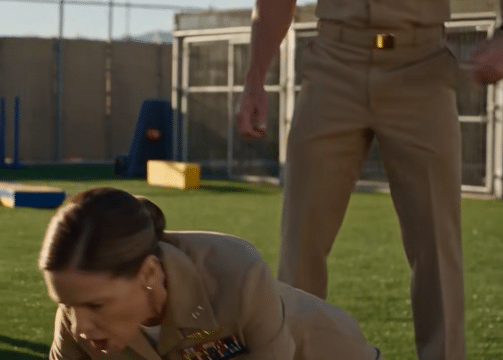
Before anyone could react, he kicked her hard in the abdomen, dropping her beside a medical cart. As she tried to brace herself, he delivered another hard kick into her side.
The room fell silent.
The doctor guarded her ribs, struggling to breathe, but she remained conscious.
The Lieutenant General stood over her, still convinced that his stars gave him the right to decide whose life mattered most.
He had just made the most dangerous mistake of his career.
Act II
The emergency department had been unusually busy that afternoon.
A military transport had brought in several casualties, including the twenty-four-year-old Specialist whose condition had deteriorated during evacuation. He was critically injured, and the medical team had been preparing to move him directly into the trauma bay.
Every minute mattered.
The General’s son had arrived separately with a wrist injury. He was uncomfortable and understandably anxious, but he was alert, stable, and able to speak with the staff.
His father had interpreted the situation differently.
He was a senior three-star commander, a man accustomed to receiving immediate attention wherever he went. For years, people had rearranged schedules, cleared hallways, and made exceptions whenever his presence demanded it.
He had begun to confuse courtesy with entitlement.
When he learned that his son would have to wait while the critically injured Specialist received treatment, he refused to accept the explanation. He demanded that the medical team move his son ahead.
The staff tried to explain that emergency care was based on medical urgency, not family connections or military rank. The General heard the explanation as an insult.
He wanted the room.
He wanted the staff.
And most of all, he wanted someone to acknowledge that his son’s needs mattered more because of who his father was.
The doctor had been overseeing the emergency response.
At forty-two, she had spent years working in military medicine. She understood command structures, the pressures of military life, and the importance of respecting senior officers.
But she also understood something more important: a trauma room was not a privilege awarded by rank.
It was a medical resource assigned according to the condition of the patient.
The Specialist on the stretcher was in critical condition. Delaying his treatment to accommodate a stable patient could cost him his life.
There was no complicated decision to make.
The doctor calmly refused to change the order of treatment.
“Not ahead of a critical soldier.”
The Lieutenant General stared at her as if she had publicly humiliated him.
He was not accustomed to hearing no, especially from someone he assumed was simply another member of the medical staff. He did not look closely at the insignia on her coat. He did not ask who had authorized her to oversee the department.
He saw only an obstacle.
“Rank decides priority.”
The doctor held her position.
She was not challenging the military hierarchy. She was protecting the medical process that ensured every patient received the care they needed.
The General’s son looked uncomfortable. He glanced toward the stretcher, then toward his father. Even he seemed to understand that the situation had gone too far.
But the General was no longer listening.
He swept the tray aside and attacked the doctor.
In seconds, a medical disagreement became an assault witnessed by nurses, physicians, and military staff.
The doctor was on the floor.
The critically injured Specialist still needed treatment.
And the man demanding priority had just created an emergency of his own.
Act III
The doctor struggled to draw a full breath.
One hand guarded her abdomen while the other pressed against the floor. Her cheek was visibly swollen, and a faint line of blood remained at the corner of her mouth.
The medical cart beside her had shifted during the fall. A few supplies lay scattered nearby, and the staff stood frozen between the injured doctor and the General.
The Lieutenant General looked down at her.
There was no immediate sign of regret.
He had expected the room to obey him. Instead, he had found someone willing to enforce the rules even when he was standing directly in front of her.
The Specialist remained on the stretcher.
A nurse glanced toward him, then back at the doctor. The staff were caught in an impossible moment: their colleague had been assaulted, but the critically injured patient still needed urgent attention.
The doctor lifted her head.
She was clearly in pain, but her expression remained controlled. She did not beg the General to stop. She did not ask him to reconsider his demand.
Her attention stayed on the patient.
That detail would matter later.
The General’s son had stepped back toward the wall. His injured wrist was still held close to his chest, but his face had changed. He had arrived expecting his father to secure immediate treatment.
Now he was watching his father stand over an injured physician while a critically wounded soldier waited nearby.
The General glanced around the room.
He seemed to expect someone to apologize for the interruption. Instead, the staff were staring at him in disbelief.
He had used his rank to demand preferential treatment. When a doctor refused, he had used physical force.
And he had done it in front of the very people responsible for keeping the hospital running.
The doctor slowly shifted onto one hand.
Her breathing was sharp. She guarded her side, but she remained conscious and alert.
The General looked down at her again, still wearing the confidence of a man who believed the room would eventually return to his control.
Then the doors opened.
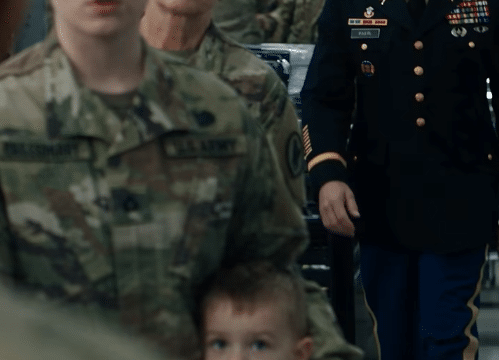
The hospital commander entered with several senior medical staff.
They had arrived after hearing that something had happened in the emergency department. Their eyes moved across the room, taking in the overturned tray, the scattered supplies, and the doctor on the floor.
The commander stopped.
He recognized her immediately.
And his next movement changed the entire room.
Act IV
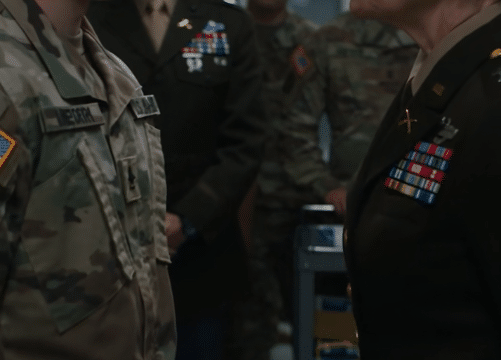
The hospital commander straightened and stood at attention.
“Ma’am.”
The single word cut through the silence.
The senior medical staff behind him stopped as well. Their expressions shifted when they recognized the woman beside the medical cart.
The Lieutenant General turned toward the commander.
He looked confused.
The doctor was wearing burgundy scrubs beneath a white military medical coat. Her rank insignia had been subdued, but it was unmistakable to those who knew what they were looking at.
She was a Major General.
And she was not simply a physician working a shift in the emergency department. She was a senior military medical officer whose clinical authority and command responsibilities were recognized throughout the hospital.
The Lieutenant General stared at her.
His three stars no longer seemed to settle the matter.
The hospital commander remained at attention. The senior medical staff followed his lead, their posture communicating a recognition that the General could not dismiss.
The doctor slowly lifted herself into a more upright position.
Her cheek remained red and swollen. The faint blood at the corner of her mouth was still visible, and she continued to guard her ribs as she breathed.
But her eyes were steady.
She did not need to announce her rank. The hospital commander had already done that through his reaction.
The Lieutenant General’s expression began to change.
He had assumed the woman was a subordinate whose authority could be brushed aside. He had attacked her because she refused to accommodate his family.
Now he was looking at a Major General.
The realization was not merely that she outranked him in the hospital’s chain of command. It was that he had assaulted a senior officer while she was performing her medical duties and protecting a critically injured soldier.
Every witness had seen it.
The hospital commander looked at the doctor, then at the General. His expression was controlled, but the seriousness of the situation was unmistakable.
The General glanced toward his son.
The young man was still standing near the wall. His wrist was injured, but he was no longer the center of attention. He looked at his father with an expression that mixed embarrassment and disbelief.
The General had demanded that everyone treat his son as more important.
Instead, he had endangered the care of another soldier, assaulted the physician protecting that patient, and exposed his own misuse of rank in front of the hospital’s senior leadership.
His authority had not disappeared.
But his ability to use it as a shield was beginning to collapse.
Act V
The Lieutenant General looked from the hospital commander to the doctor.
“Why are you calling her ma’am?”
His voice had lost its certainty.
The Major General remained beside the medical cart, still recovering from the assault. She did not take her eyes off him.
The hospital commander held his position. The senior medical staff stood behind him, their attention fixed on the woman who had been attacked while trying to protect a critically injured patient.
The General’s son lowered his eyes.
For the first time, he seemed to understand the full weight of what his father had demanded. His wrist injury had been real, but it had never justified pushing a critically wounded soldier aside.
The doctor had not refused to treat him.
She had refused to treat him first.
There was a difference, and it was one his father had been unwilling to recognize.
The Specialist still needed emergency care. The medical team had to return its attention to him, and the doctor remained focused on that priority despite her own injuries.
The hospital commander had seen enough to understand that the incident required immediate attention. The assault could not be dismissed as a heated exchange, and the demand for preferential treatment could not be separated from what had happened next.
The General had invoked rank to override medical judgment.
When that failed, he had used violence.
And the person he had attacked was a Major General who had been doing exactly what her position required: protecting a patient whose condition made every second important.
The doctor slowly straightened as much as her injuries allowed.
Her expression was calm again, but it was no longer the calm of someone trying to prevent an argument. It was the composure of an officer who knew that the facts were now visible to everyone in the room.
The General’s three stars had once been enough to make people move aside.
Now the hospital commander stood at attention before the woman he had attacked.
The son would receive medical care. The Specialist would receive the urgent treatment he needed. And the General would have to answer for the choices he had made inside a place where rank was never supposed to determine who deserved to survive.
The emergency department had not been built for powerful families.
It had been built for people who needed help.
And the doctor on the floor had refused to let anyone forget that—even when the man demanding special treatment was one of the most powerful officers in the room.