Act I
“Search the room before you accuse him.”
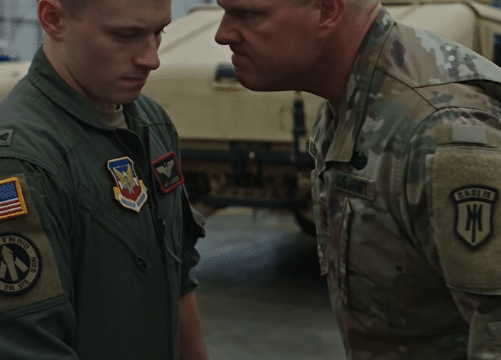
The woman’s voice cut through the barracks hallway as a twenty-year-old Private First Class stood frozen beside an open locker. His face was pale, his hands trembling slightly. A missing military watch had turned him into the center of a public accusation, and the Colonel questioning him had already decided he was guilty.
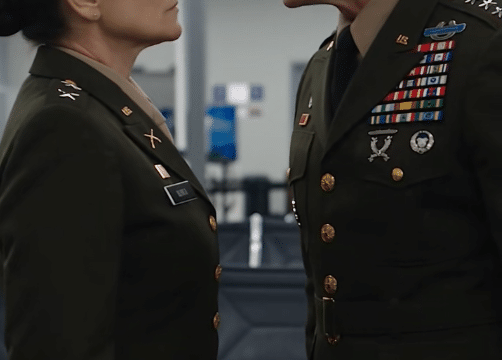
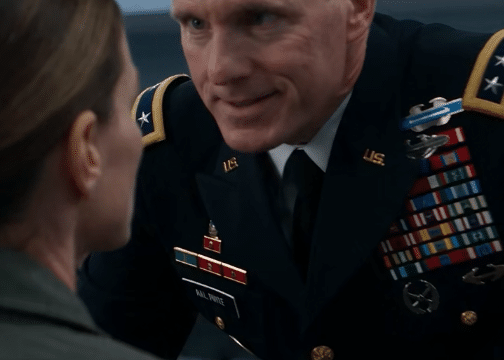
The Colonel turned toward the woman in her Army service uniform. His silver eagle insignia and polished shoes made his rank impossible to miss.
“I don’t need permission from you.”
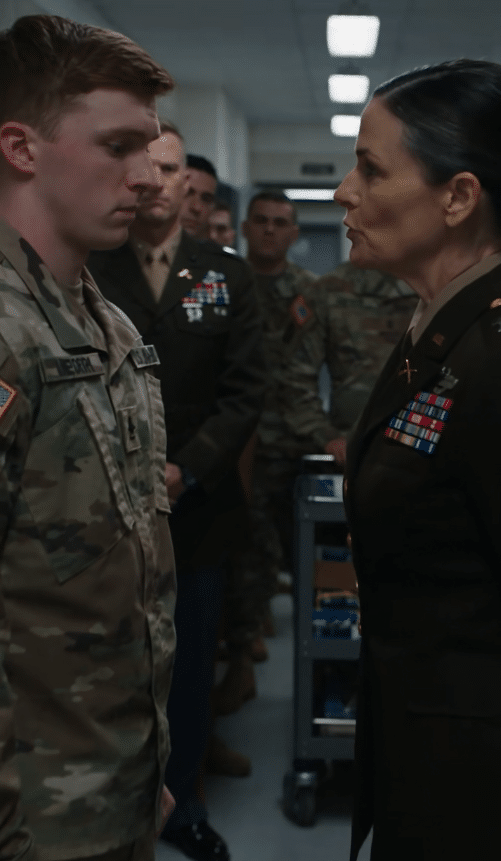
She remained composed. Her dark hair was secured in a formal military bun, and her two-star insignia sat neatly among the restrained decorations on her uniform. She had not raised her voice. She had simply asked for the most basic thing an investigation should require: evidence.
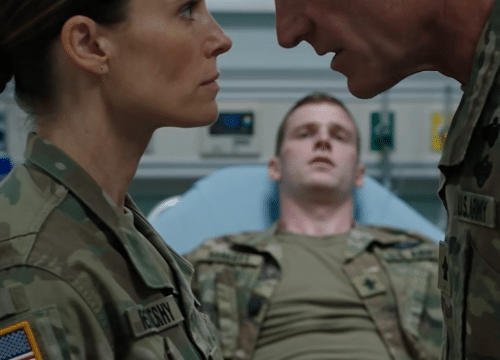
The Colonel stepped closer.
“You defend thieves, you stand with thieves.”
The young soldier lowered his eyes. He had been ordered to empty his pockets, explain his movements, and account for every minute since the aide had reported the watch missing. He had done everything asked of him, but the Colonel seemed interested only in making an example of someone.
The woman saw the fear in the Private’s face.
She also saw the soldiers watching from their doorways. No one wanted to become the next target. The Colonel had turned a missing watch into a public display of power, and the young soldier had no way to stop it.
Then the Colonel turned away from the Private and faced her.
His expression hardened.
Before anyone could intervene, he struck her across the cheek.
The hallway fell silent.
And the Colonel was about to discover that the woman he had just attacked was the one person he should never have underestimated.
Act II
The accusation had started with a simple report.
A military watch belonging to the Colonel’s aide had disappeared. It was not an ordinary personal accessory. The aide had been carrying it with other equipment during the unit’s movements between the barracks and a command vehicle.
When he noticed it was missing, he reported the loss.
The Colonel reacted as though the entire unit had been personally insulted.
He demanded answers immediately. Soldiers were questioned, lockers were inspected, and the hallway became an impromptu investigation site. The Private First Class had been among the last people near the aide’s belongings, so suspicion settled on him.
That was all the Colonel needed.
The young soldier insisted he had not taken the watch. He explained where he had been and offered to let them search his room. But each answer seemed to make the Colonel angrier.
The Private had little experience dealing with senior officers. He understood the chain of command, and he knew that a direct accusation from a colonel could follow him long after the incident ended.
A theft allegation could damage his reputation, affect his evaluations, and cast doubt on every responsibility he might be given in the future.
He was frightened not because he had done something wrong, but because he knew how difficult it could be to prove that he had not.
The woman had arrived in the barracks corridor as part of a command visit. At forty-one, she had served long enough to recognize the difference between a legitimate investigation and a public humiliation disguised as discipline.
She had watched the Colonel question the Private.
She had listened to the accusation.
And she had noticed what was missing: no confirmed search of the room, no established timeline, and no physical evidence connecting the young soldier to the watch.
The Colonel was treating suspicion as proof.
She stepped in before the situation could go further.
“Search the room before you accuse him.”
It was a reasonable instruction. It was also an instruction the Colonel did not want to hear.
He had already made his judgment in front of witnesses. Backing down would mean admitting that he had moved too quickly, and the Colonel valued his image more than he valued being fair.
He refused to accept her intervention.
“I don’t need permission from you.”
The woman did not argue about rank. She did not turn the hallway into a contest of authority. She simply held her ground and waited for him to follow the evidence.
That restraint enraged him.
To the Colonel, her refusal to retreat was an open challenge. He looked at the Private, then at her, as though the two had become part of the same offense.
“You defend thieves, you stand with thieves.”
The woman understood what he was doing.
He was trying to make defending an innocent soldier look like defending misconduct. If she stepped away, the Private would be left alone. If she continued, the Colonel could accuse her of undermining his authority.
It was a trap built around fear.
But she had no intention of leaving the young soldier to face it alone.
The Colonel made his next move without warning.
Act III
The slap landed hard across her cheek.
Her head snapped to one side. A red mark rose quickly across her skin, followed by a faint trace of blood at the corner of her mouth.
The soldiers in the corridor froze.
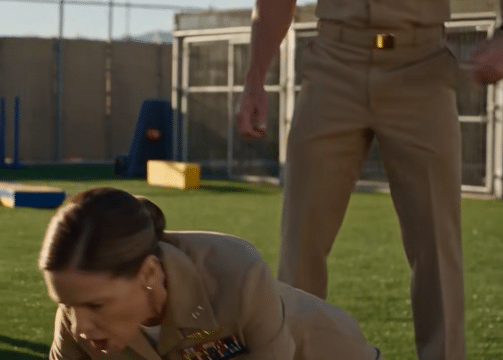
The Colonel immediately drove a hard kick into her abdomen, sending her backward into a row of metal lockers. The impact rang through the hallway, and her shoulder struck the metal with a sharp, hollow sound.
She tried to steady herself.
He struck her upper body again, slamming her shoulder against the locker a second time.
For a moment, she struggled to draw a full breath. One hand moved toward her abdomen as she braced herself against the metal surface.
The Private stared in disbelief.
He had been the one accused of wrongdoing. He had been the one the Colonel wanted to punish. Yet the woman who had asked for a fair search was now the person suffering in his place.
A soldier near a doorway took half a step forward, then stopped. Another looked toward the far end of the corridor, as if expecting someone to appear and put an end to what was happening.
The Colonel stood in front of her, breathing hard.
His expression showed satisfaction rather than regret.
“You defend thieves, you stand with thieves.”
He said it as though the words explained everything. As though accusing someone of theft gave him permission to strike anyone who questioned him.
The woman remained against the locker for a moment, guarding her abdomen. Her cheek was visibly swollen, and the faint blood at the corner of her mouth remained.
But she did not lower her eyes.
The Colonel had expected her to retreat. Instead, she looked back at him with a cold, measured expression.
The Private was still standing nearby.
She had not forgotten why she had stepped forward.
The watch was still missing. The accusation was still unproven. And the Colonel’s violence had done nothing to establish the truth.
Then footsteps sounded at the far end of the corridor.
The aide appeared, moving quickly.
In his hand was a watch.
The missing watch.
Act IV
The aide stopped a few feet away, holding the item where everyone could see it.
“I found it in the vehicle, sir.”
The words were simple.
Their effect was devastating.
The Private’s expression changed first. He looked at the watch, then at the Colonel, struggling to process what had just happened. The accusation that had threatened to stain his service record had collapsed in a single sentence.
The aide had found the watch in the vehicle.
The young soldier had never stolen it.
The Colonel stared at the item in his aide’s hand. His face tightened as he realized that the entire confrontation had been built on an assumption he had treated as fact.
The soldiers along the hallway remained silent.
Only moments earlier, the Colonel had publicly branded the Private a thief. He had rejected a request to search the room before making an accusation. He had then assaulted the woman who challenged his judgment.
Now the missing watch had been found somewhere else entirely.
There was no longer any mystery about the Private’s innocence.
The aide’s discovery should have ended the matter with an apology and a correction. But the consequences had already become much larger than a misplaced watch.
The woman was still standing against the lockers, visibly injured. Her cheek was swollen, and she was breathing carefully through the pain. The Colonel had struck her in front of witnesses, and the truth about the watch had arrived only after the assault was complete.
Then another figure appeared in the hallway.
The Battalion Command Sergeant Major approached from the far end. His eyes moved across the gathered soldiers before settling on the woman.
He recognized her immediately.
His posture changed.
He stopped, snapped to attention, and raised a formal salute.
The Colonel turned toward him.
For a second, he seemed unable to understand why the senior enlisted leader had reacted that way. Then his eyes followed the Command Sergeant Major’s line of sight.
The two-star insignia.
The formal uniform.
The woman he had just assaulted.
She was a Major General.
The realization drained the color from his face.
Act V
The Colonel’s eyes remained fixed on her.
“Ma’am…?”
The word came out almost as a whisper.
The Major General did not answer immediately.
She was still recovering from the impact against the lockers. Her cheek was red and swollen, and the faint trace of blood at the corner of her mouth remained visible. But her expression was controlled.
The Command Sergeant Major held his salute.
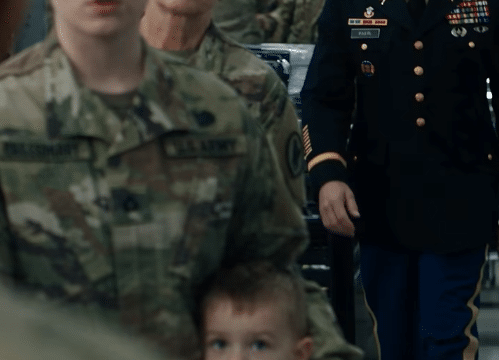
The soldiers in the corridor stood rigidly, watching the confrontation. The aide still held the recovered watch. The young Private remained near his open locker, no longer the center of an accusation but a witness to how quickly an abuse of authority could unravel.
The Colonel looked at the Major General’s insignia again.
He had believed he was defending discipline. He had believed his rank gave him the right to decide who was guilty and who deserved to be humiliated.
But the evidence had contradicted him.
The watch had been in the vehicle. The Private had been innocent. The woman had asked for a proper search, and the Colonel had answered with violence.
No explanation could turn those facts into something else.
The Major General finally shifted her gaze toward the young soldier.
He stood very still, uncertain whether the accusation had truly ended. His shoulders were tense, and his hands remained close to his sides.
She gave him a brief look of reassurance.
He had been right to deny the accusation. He had been right to ask for the truth to be established. And he should never have been made to feel that telling the truth was an offense.
Then she looked back at the Colonel.
The recovered watch was still in the aide’s hand. The Command Sergeant Major was still saluting. Every soldier in the corridor had witnessed the accusation, the assault, and the discovery that proved the Private innocent.
The Colonel had wanted to make an example of a young soldier.
Instead, he had made himself the example.
The Major General did not need to shout. Her authority was already clear, and the facts were clearer still.
The missing watch had been found.
The wrong person had been accused.
And the officer who had demanded unquestioning obedience had just been confronted with the consequences of refusing to question his own judgment.
The Private would not have to carry the stain of a theft he never committed.
But the Colonel would have to answer for what he had done.
In that hallway, the most powerful person had not been the one who shouted the loudest or wore the silver eagle.
It was the one who had insisted that a soldier deserved evidence before judgment—and who had refused to abandon him when standing up for the truth became dangerous.
Tighten the story for 30 secondsRemove repeated dialogue and events