Act I
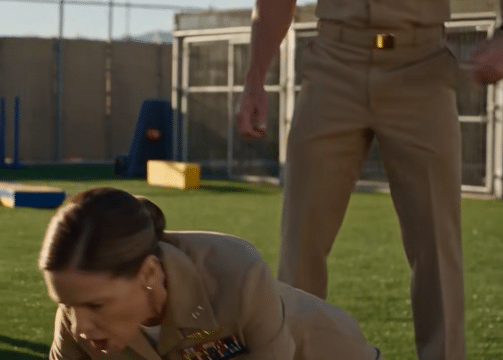
“You hit me with that.”
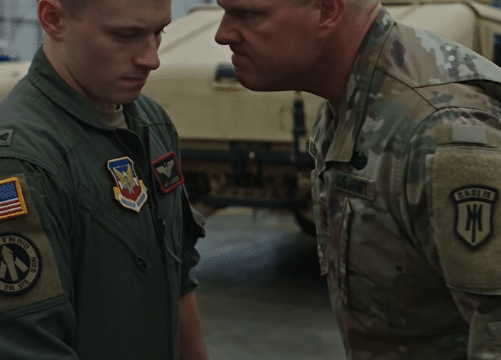
The Brigadier General’s angry voice echoed through the tiny lakeside bait shop.
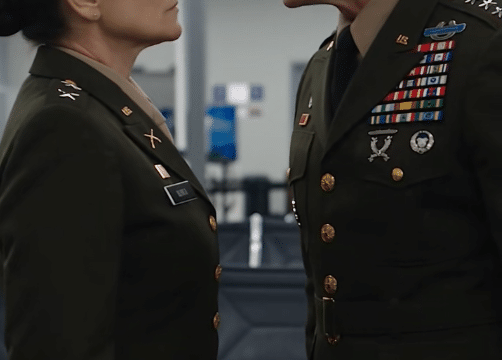
He stood between two rows of fishing equipment, staring at an elderly shopkeeper in a faded green work shirt and canvas vest. His immaculate U.S. Army uniform, one-star insignia, and command patches made his rank unmistakable.
The old man stood behind the counter, holding a fishing rod.
A moment earlier, the rod had slipped from a display rack and lightly brushed the officer’s sleeve as the shopkeeper tried to move it out of the way.
The officer looked at the tiny mark on his uniform with exaggerated disgust.
The shopkeeper glanced at the sleeve.
“It barely touched you.”
His voice was calm, almost apologetic.
At seventy-three, he had spent most of his life running the little bait-and-tackle shop beside the lake. He knew nearly every fisherman in town and could identify the regular customers by the sound of their trucks pulling into the gravel parking lot.
He wasn’t looking for trouble.
But the Brigadier General seemed determined to find it.
He stepped closer.
Then he suddenly swung his fist.
The punch struck the old man’s cheek with brutal force. His head snapped sideways, and a faint trace of blood appeared at the corner of his mouth.
Before the shopkeeper could regain his balance, the officer drove a hard kick into his abdomen.
The old man folded forward and crashed onto the wooden floor.
A tackle box tipped over. Fishing hooks and small accessories scattered across the boards.
A customer near the bait refrigerator gasped.
The Colonel—no, the Brigadier General—looked down at the fallen shopkeeper, apparently satisfied with himself.
Then he reached into his pocket and pulled out several dollar bills.
He tossed them onto the old man’s chest.
“Replace your cheap equipment.”
The shopkeeper struggled to breathe.
His cheek was swelling, but he slowly lifted his eyes toward the officer.
There was no pleading.
No panic.
Only a quiet, unmistakable dignity.
The Brigadier General adjusted his uniform.
He believed the money had settled the matter.
He had no idea that the old man on the floor was the father of a four-star general.
And that his son was about to arrive.
Act II
The shopkeeper’s name was Walter Hayes.
For more than forty years, Walter had operated the small bait shop near Lake Cumberland.
It wasn’t much to look at.
The wooden floor creaked beneath customers’ boots. Old fishing rods leaned against the walls, tackle boxes filled the shelves, and two aging refrigerators hummed behind the counter.
A faded photograph of Walter holding a large bass hung near the entrance.
He had never cared about making the place look expensive.
His customers came for honest advice, affordable supplies, and the kind of conversation that couldn’t be found in a shopping mall.
Walter knew which parts of the lake were best for catching bass after heavy rain. He knew which customers were beginners and which ones exaggerated the size of every fish they caught.
He also knew what it meant to work hard without expecting recognition.
His wife had passed away several years earlier, and the shop had become his daily routine.
But there was one person he was especially proud of.
His son, Daniel.
Daniel Hayes had grown up helping his father clean fishing equipment, unload supply deliveries, and sweep the wooden floor before opening time.
Walter had taught him that a person’s character was measured by how he treated others, especially those who could do nothing for him in return.
When Daniel decided to enter military service, Walter never tried to discourage him.
He simply told his son to remember where he came from.
Decades passed.
Daniel rose through the ranks, served in demanding assignments, and eventually became a four-star general in the United States Army.
His responsibilities took him around the world.
Yet whenever he returned home, he made time for his father.
He still visited the bait shop.
He still sat on the old wooden stool behind the counter.
And he still listened to Walter’s fishing stories, even when he had heard them a hundred times.
Walter never used his son’s position to intimidate anyone.
Most customers didn’t even know his son was a general.
He preferred being known as the old fisherman who could tell you exactly where the fish were biting.
That afternoon, the Brigadier General had stopped at the shop during an official military visit to the nearby region.
He had treated the local customers with impatience from the moment he entered.
He seemed offended by the dusty shelves, the worn wooden counter, and the ordinary people asking questions around him.
Then the fishing rod had brushed his sleeve.
And his arrogance had turned into violence.
Now Walter lay on the floor, breathing through the pain, while the officer stood above him.
Neither man noticed the first black SUV turning into the gravel parking lot.
But the sound of its brakes was about to change everything.
Act III
The first vehicle stopped directly outside the shop.
A second followed.
Then the doors opened.
Five uniformed officers emerged alongside a decorated senior military figure.
The shop’s customers turned toward the entrance.
Even the Brigadier General looked up.
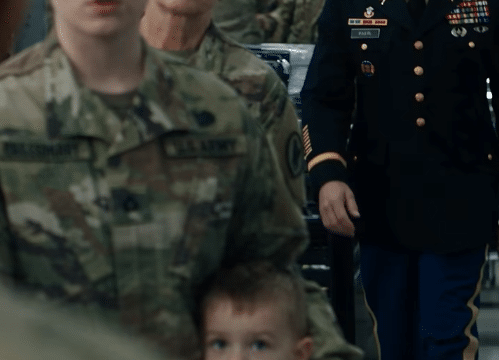
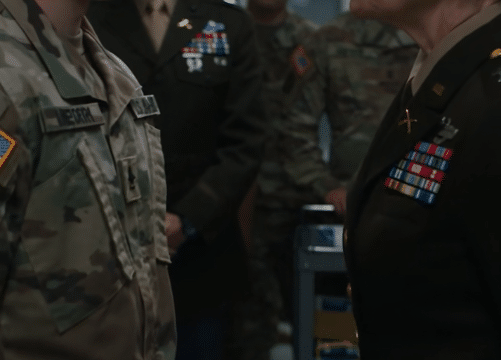
The senior officer’s face remained hidden from view. The camera showed only his formal military uniform, decorated shoulders, four-star insignia, rows of ribbons and medals, and polished boots.
His presence immediately changed the atmosphere.
These were not ordinary visitors.
The accompanying officers moved quickly, maintaining a disciplined formation as they entered the small shop.
The Brigadier General instinctively straightened his posture.
He recognized the four-star insignia.
His expression shifted from irritation to confusion.
Why would a four-star general be visiting a little bait shop?
The senior officer didn’t stop to speak with him.
He walked directly toward Walter.
One of the accompanying officers moved aside to make room.
Another noticed the scattered fishing equipment and dollar bills on the floor.
The senior general stopped beside the injured shopkeeper.
For a moment, he said nothing.
His attention moved from Walter’s swollen cheek to the hand resting against his abdomen.
Then he looked at the money scattered across his father’s chest.
His posture stiffened.
Walter slowly raised his eyes.
He recognized the uniform immediately.
He didn’t call his son’s name.
He didn’t ask for help.
He simply looked at him with the quiet expression of a father who knew his son would understand what had happened.
The Brigadier General watched the exchange.
Something about it made him uncomfortable.
He looked at the senior officer’s four stars.
Then at the old man lying on the wooden floor.
A terrible possibility began forming in his mind.
But before he could put the pieces together, the senior general turned toward him.
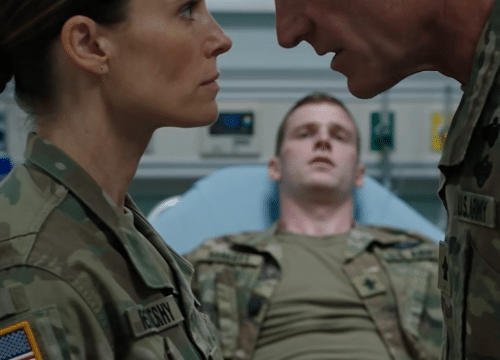
His voice was low and controlled.
“Which hand hit him?”
Nobody moved.
The question seemed to hang in the air above the scattered fishing tackle.
And suddenly, the Brigadier General understood that the encounter was no longer about a fishing rod.
Act IV
The Brigadier General stared at the four-star general.
For the first time since entering the shop, he had nothing to say.
His eyes moved toward the senior officer’s insignia.
Then back toward Walter.
The old man was still wearing the same green work shirt, canvas vest, and faded jeans.
His boots were worn from years of walking across the shop floor.
He didn’t look like someone who belonged in a military command briefing.
But the man standing beside him was treating him with unmistakable personal concern.
One of the accompanying officers knelt beside Walter and carefully checked his condition.
Another began collecting the details of what had happened.
The customers remained frozen.
The man who had been standing near the refrigerator stepped forward and confirmed that he had witnessed the entire assault.
He had seen the punch.
He had seen the kick.
And he had watched the officer throw money onto Walter’s chest.
The Brigadier General’s expression began to change.
He looked at the old shopkeeper again.
The connection finally became clear.
Walter Hayes wasn’t just an elderly local businessman.
He was the father of the four-star general standing directly in front of him.
The father of the man whose authority extended far beyond anything the Brigadier General could claim.
The same father who had raised him in this very community, teaching him that respect was earned through character rather than rank.
The Brigadier General’s confidence began collapsing.
He glanced at his own one-star insignia.
Only moments earlier, he had treated those stars as permission to intimidate an ordinary shopkeeper.
Now he was standing before an officer whose rank was unmistakably higher, while the people he had humiliated watched in silence.
Walter slowly shifted his position.
His face showed pain, but he refused to lower his eyes.
The four-star general remained beside him.
There was no shouting.
No dramatic threat.
Instead, the senior officer made it clear that the incident would be formally reported, that the witnesses would be heard, and that any available security footage would be preserved.
The Brigadier General would face an official investigation into his conduct.
His rank would not erase what had happened.
And the money he had thrown onto Walter’s chest would remain part of the evidence of his humiliation.
For the first time, he seemed to understand that the old man’s dignity had never depended on his uniform.
His own, however, was now in serious question.
Act V
The little bait shop had become completely silent.
Outside, the lake continued moving gently beneath the afternoon light.
Inside, the five officers stood around Walter while one helped him sit upright.
The four-star general remained close to his father.
He looked at the scattered fishing tackle, the damaged display rack, and the dollar bills lying on the old man’s chest.
Then he looked at Walter.
The old man gave him a faint nod.
It was the kind of gesture fathers give their children when they don’t want to make a difficult moment even harder.
Walter had never wanted special treatment.
He had never wanted his son’s rank to become a weapon against other people.
And he certainly hadn’t wanted his little shop turned into the center of a military scandal.
But he also knew that what had happened could not simply be ignored.
The general turned toward the accompanying officers.
The evidence would be preserved. The witnesses would provide statements, and the appropriate authorities would be informed.
The Brigadier General stood nearby, his posture no longer confident.
He looked at Walter.
Then at the four-star insignia.
His face had gone pale.
Sweat appeared near his forehead, and his jaw loosened.
He had entered the shop believing that a worn-out old fisherman was beneath his attention.
Now he was beginning to understand that the man he had attacked was the father of one of the most senior military officers in the country.
He tried to speak.
But the words came out in disbelief.
“Four-star…? Why here?”
Nobody answered.
The camera moved closer to his face.
His eyes widened.
His arrogance had disappeared completely.
Then came the hard cut to black.
Walter Hayes had spent forty years building a small business where everyone was welcome, regardless of money, background, or status.
He had raised a son who learned that true leadership meant protecting people, not humiliating them.
And the officer who had thrown money at an old shopkeeper had just discovered the one thing his stars could never teach him:
A person’s worth has nothing to do with the uniform they wear.
Sometimes, the quietest man in the room has raised the most powerful one.
Fix the Colonel Rank ContradictionTrim Repetitive Character Exposition